Murcia's new secret weapon in the fight against plant pests is all natural... and beautiful, too!
The city is using ladybirds, as natural predators, again this year to help protect community gardens from aphids
Murcia’s community gardens are getting a fresh line of defence against pests, with more than 3,000 ladybirds being released across the municipality to help keep aphids and other harmful insects under control. The measure is being repeated for a second year running, with the Ayuntamiento once again choosing a natural solution rather than chemical products.
The release took place this Monday morning in Molino del Amor, where Councillor for Urban Planning, Agriculture and Environment Antonio Navarro joined the distribution of nearly 200 of the insects. He said: “With this initiative, the Ayuntamiento is committed to implementing sustainable and ecological measures in agricultural and gardening activities, as well as promoting environmental awareness.”
The species being used is Adalia bipunctata, better known as the two-spot ladybird. The Ayuntamiento says it plays an important role in balancing agricultural ecosystems and is particularly effective against aphids, spider mites and other small mites that are more common at this time of year.
In total, around 3,000 ladybirds are being spread across 12 leisure-garden areas in the municipality, at a density of between one and two per square metre. Around 200 have been released in each of the gardens at Sangonera, Montevida, Santo Ángel, Santiago el Mayor, El Lago, Beniaján, Churra, Guadalupe and Molino del Amor. Larger plots at Aljucer, El Puntal and Joven Futura have each received nearly 400.
The process is carefully managed. The insects are placed on strips of paper with sugar cubes, then transported in special containers before being released in small colonies onto the plants. They are let out early in the morning, when the temperature is lower and sunlight is weaker, so they are less active and more likely to stay on the crops where they are placed.
The ladybirds themselves are small but distinctive, measuring between four and five millimetres. They have a red shell with a black spot on each wing cover, a black head with two white spots and a white thorax marked by a black M-shape.
For the city, the aim is simple. The ladybirds help protect the gardens, support biodiversity and reinforce a more sustainable way of looking after urban green spaces.






















 Murcia’s community gardens are getting a fresh line of defence against pests, with more than 3,000 ladybirds being released across the municipality to help keep aphids and other harmful insects under control. The measure is being repeated for a second year running, with the Ayuntamiento once again choosing a natural solution rather than chemical products.
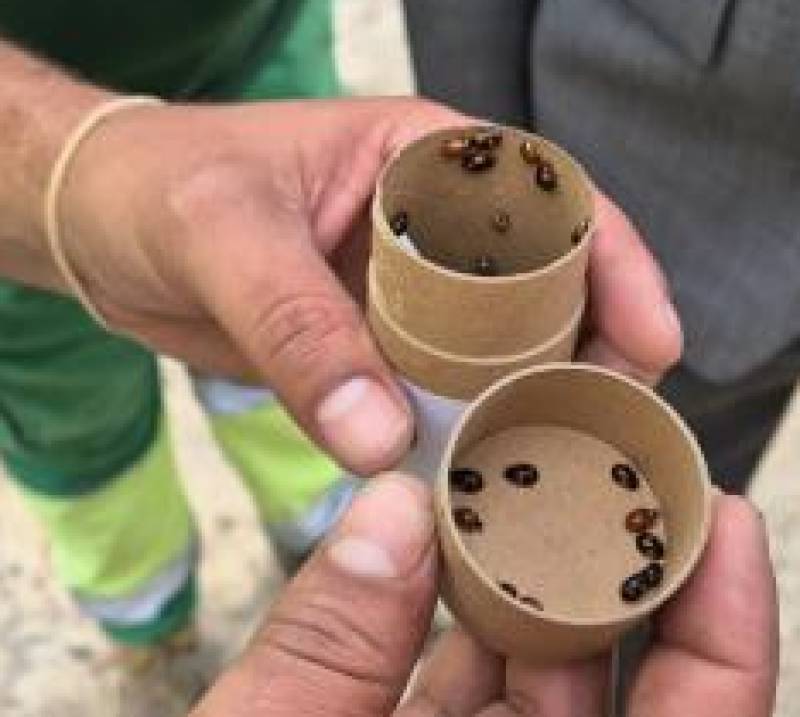 The species being used is Adalia bipunctata, better known as the two-spot ladybird. The Ayuntamiento says it plays an important role in balancing agricultural ecosystems and is particularly effective against aphids, spider mites and other small mites that are more common at this time of year.
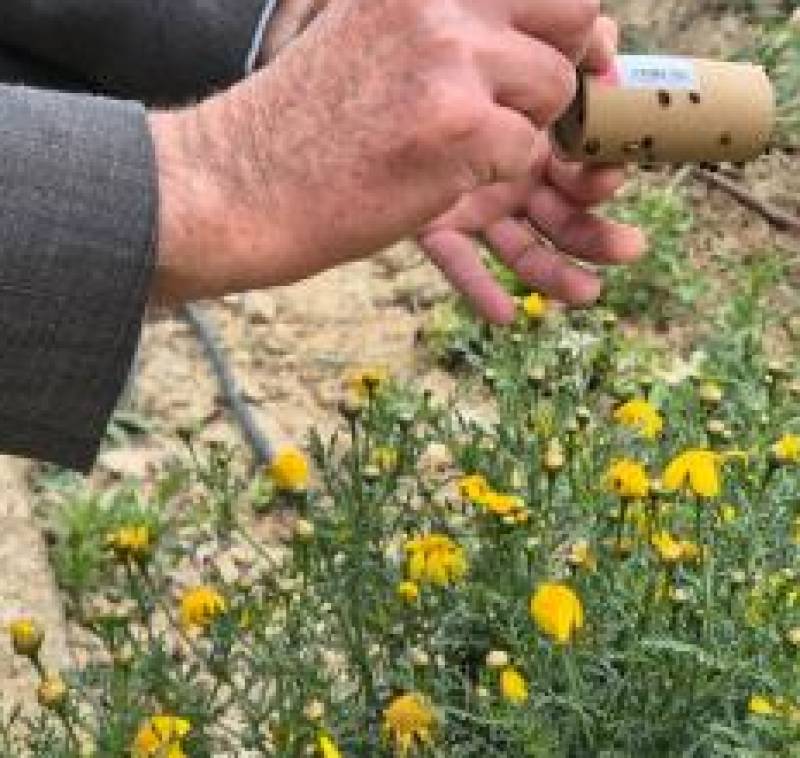 The ladybirds themselves are small but distinctive, measuring between four and five millimetres. They have a red shell with a black spot on each wing cover, a black head with two white spots and a white thorax marked by a black M-shape.