Murcia's beaches fall short on accessibility for people with reduced mobility
ARCHIVED ARTICLE -
Only 17 of 74 beaches assessed offer full independent access, leaving thousands unable to enjoy the sea on equal terms
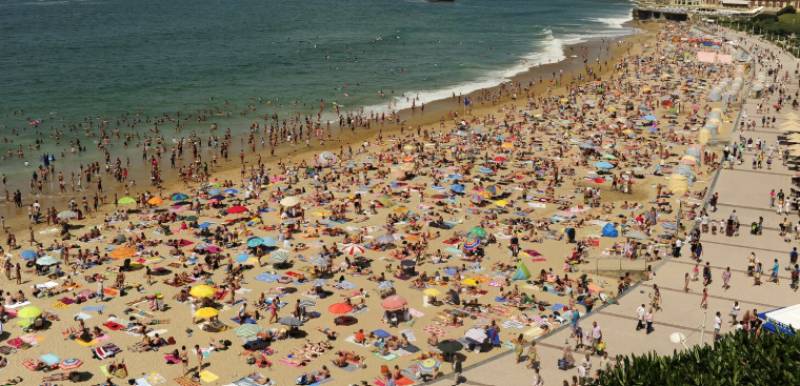
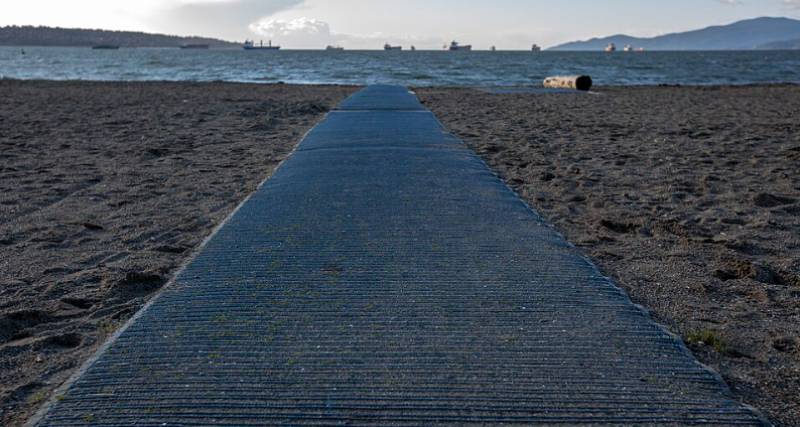
For thousands of people with reduced mobility in the Region of Murcia, getting to the beach means dragging themselves across scorching hot sand because walkways stop short of the water. It's humiliating and painful, yet it's their daily reality when they want to go for a dip and enjoy the sea.
Carmen Gil, president of Famdif, puts it plainly: "it's not about asking for favours, but about being able to reach the same places as anyone else; something that is our right." Federation members complain about having to "be carried, like they're in a queen's chair" because boardwalks don't reach the shore.
The latest figures show slow but steady improvement, though there's still a long way to go. In 2025, the Technical Office of Accessibility (OTAF) of Famdif/Cocemfe assessed 74 main beaches on the Costa Cálida, commissioned by the Tourism Institute of the Region of Murcia (Itrem). Just 17 were fully accessible - barely 23%, or less than one in four.
The numbers by town
Cartagena comes out on top with 8 fully accessible beaches, San Javier follows with 6, Mazarrón has 2, and San Pedro del Pinatar has 1. The troubling part? Four of the eight coastal municipalities: Águilas, Lorca, La Unión and Los Alcázares, didn't have a single beach accessible without obstacles last summer for the 45,000 to 55,000 people with reduced mobility in the region.
Out of all 74 beaches assessed, 32 were classified as accessible with more or less complete facilities. The remaining 25 were deemed completely inaccessible because they "do not guarantee access to the beach (...) either independently or with the assistance of support persons."
What's stopping people?
Sisara Izquierdo Cegarra, 26, a social worker at the RafaPuede Foundation in San Javier, explains the practical barriers: "If the walkways don't reach close to the water, and I'm alone in the electric wheelchair, it's unthinkable that I'd go onto the sand." She adds that "on some beaches there are few or only one amphibious chair, so it's difficult to spend the whole day: if another person in my situation arrives, I have to get out."
Wheelchairs sinking into sand where walkways fall short, ramps too steep to manage alone, not enough reserved parking, insufficient amphibious chairs and walkers, missing shaded areas or adapted toilets – these are the obstacles preventing 57 of 74 beaches from being truly accessible.
María Pilar Gancedo González from San Pedro del Pinatar says she's had to turn back and go home "on countless occasions" without entering the sea. "The lifeguards and the people who accompany you work tirelessly from the end of the wooden walkway to the water's edge, and I would ask the authorities for far more resources, much more complete facilities, and more staff," she says.
Steps forward
There is some positive news. By 2025, 11 beaches provided free assisted bathing services with qualified staff and amphibious chairs. Playa Honda, Puerto Bello and San Ginés, all in Cartagena, even have changing rooms and outdoor showers. Municipalities have until March 2030 to develop accessibility action plans. Recent funding went to Águilas for amphibious equipment and flexible walkways, Los Alcázares for foot showers and adapted restrooms, and San Pedro del Pinatar for improvements at La Puntica and Villananitos.
Gil's vision is clear: "Normalisation must reach all spaces. Is it difficult? Obviously, but I would be happy if, just as Blue Flags are awarded, there were flags for accessibility."





















 For thousands of people with reduced mobility in the Region of Murcia, getting to the beach means dragging themselves across scorching hot sand because walkways stop short of the water. It's humiliating and painful, yet it's their daily reality when they want to go for a dip and enjoy the sea.