















More than €11.5 million is being invested in eight new projects that will look at ways to reduce livestock pollution reaching the Mar Menor, with scientists, universities and farmers working together to find practical solutions that could benefit the entire sector.
The projects form part of the Spanish government's ongoing efforts to improve the health of the lagoon by tackling pollution before it reaches the water. Rather than focusing on cleaning up the Mar Menor afterwards, the work will concentrate on reducing contamination at its source.
Six of the eight projects will develop new ways of treating and reusing pig slurry, while the other two will promote extensive sheep farming, allowing sheep to graze across open pasture rather than relying on more confined production methods.
The work will take place across Murcia, Cartagena, Torre Pacheco, Fuente Álamo, San Javier and San Pedro del Pinatar. In total, 282 pig farms will be involved, along with two sheep farms with around 5,000 animals and 12 grazing sites.
Researchers expect the projects to treat or separate more than 20,000 cubic metres of slurry every year. Around 3,600 tonnes of manure and slurry are also expected to be turned into biofertilisers annually, while around 10 tonnes of wool will be used to help regenerate and fertilise soils. Compost, biochar and other useful products will also be created from materials that would otherwise go to waste.
If the techniques prove successful, they could reduce nitrogen in livestock waste by between 20% and 70%, while phosphorus levels could fall by between 20% and 60%. Both nutrients have long been linked to the environmental problems affecting the Mar Menor when they enter waterways in excessive amounts.
The projects bring together 15 organisations, including research centres, universities, farming organisations and environmental specialists. As well as testing the different techniques, the teams will assess how effective they are and share what they learn with livestock producers across the Region.
Each project has up to three years to complete its work and is backed by scientific experts who will monitor the results and assess whether the methods could be adopted elsewhere.
The funding is part of the Spanish government's Priority Action Framework for the Recovery of the Mar Menor, which has an overall budget of €675.05 million and also includes 10 projects trialling more sustainable farming practices across the Mar Menor area since 2023.
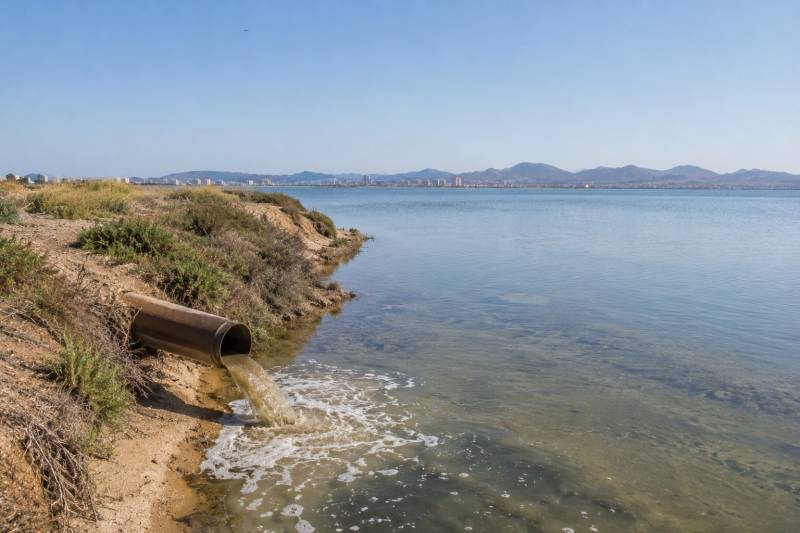
Image: Artistic representation
staff.inc.ali