











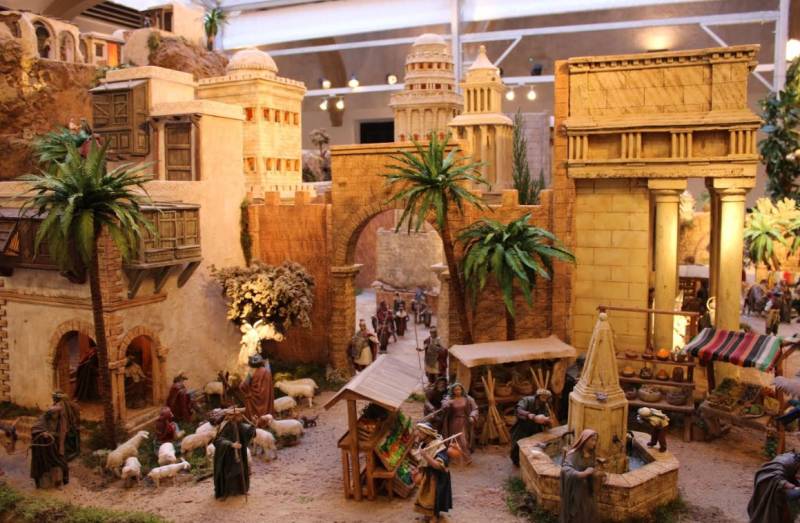
 The city of Lorca is renowned for its depictions of Biblical history during the spectacular processions of Easter Week every year, and it is therefore not so surprising that the municipal nativity scene installed in the Palacio de Guevara is similarly themed.
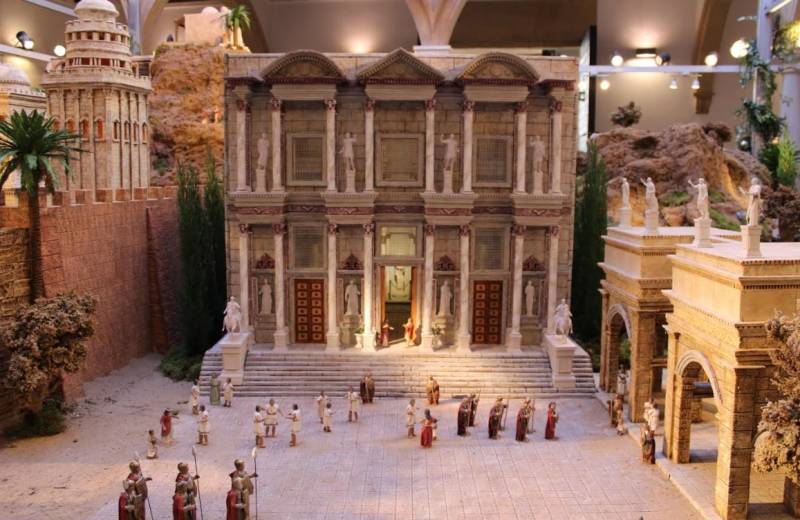
Among the elements recreated in the patio of the Palacio de Guevara are the Towers of Herod, the library of Celsus in Ephesus and the Roman bridge of Calamocha in the province of Teruel and the towers of Phasael, Hippicus and Mariamme, which are to be found in Jerusalem, making this one of the most educational nativity scenes you could wish for!
 Approximately 500 figures populate the tableau, which was visited last year by some 32,000 people, thus vindicating the efforts of the Peña La Jarapa in installing it.
The original towers of Phasael, Hippicus and Mariamme were 50, 43 and 23 metres high and were a symbol of authority and grandeur, while the bridge of Calamocha was on the Roman road from Cástulo to César Augusta.
As for the library of Celsus, it was built between 114 and 125 AD by Celsus’ son, Tiberius Julius Aquila Polemaeanus. It contained around 12,000 scrolls, making it the third largest in the ancient world behind those of Alexandria and Pergamon, and was the place of the burial of the builder.
 This nativity scene was first created in 1998 but the tradition in Lorca goes back far further, probably at least to the early 18th century, when there is mention of the cult of Nuestra Señora del Belén in Aguaderas in 1743. But the custom was brought over from the Kingdom of the Two Sicilies, having been created by Francis of Asisi in the 13th century.
For more local events, news and visiting information contact the tourist office at the Palacio de Guevara (telephone 968 441914) or go to the home page of Lorca Today.
staff.inc.ali
The rich and extensive history of Lorca has left a legacy of archaeological sites, and historic buildings, around which the modern city has built its tourism industry. Among these are Lorca Castle, the Jewish quarter of the castle and synagogue, Plaza de España, Colegiata de San Patricio, Museo de Arqueologico Municipal, Iglesia de San Francisco, Casa Huerto Ruano, Palacio de Guevara, Iglesia de San Mateo, Pósito de los Panaderos, Convento Virgen de las Huertas, Antiguo Convento de la Merced, Iglesia del Carmen and the Teatro Guerra.
 Unfortunately Lorca has also been prone to natural disaster, suffering a Gota Fría on September 28th 2012, as well as two earthquakes measuring 5.3 and 5.5 on the Richter scale on 11th May 2011, claiming 9 lives. Since this earthquake the city has been rebuilding, winning recognition for its Lorca, Open for Restoration initiative, which used the restoration of the city as a tourist attraction whilst it rebuilt its historical buildings, some of which are currently still not open.
The tourist office relocated for 14 years to Calle San Patricio, near the church, but has now returned to its former premises alongside the Palacio de Guevara in the Plaza Concha Sandoval, or Plaza de la Bordadora (click for map).
Lorca also has an area of coastline incorporating the Parque Regional de Cabo Cope - Puntas de Calnegre, in the Sierra de Almenara, which includes the beaches of Puntas de Calnegre, Baño de las Mujeres, San Pedro, El Siscal, Cala Honda, Cuartel del Ciscar, Junquera, Cala de la Gruta, Cala Leña, Los Hierros, Cala Blanca and Playa Larga, although many are accessible only along difficult tracks or by boat!

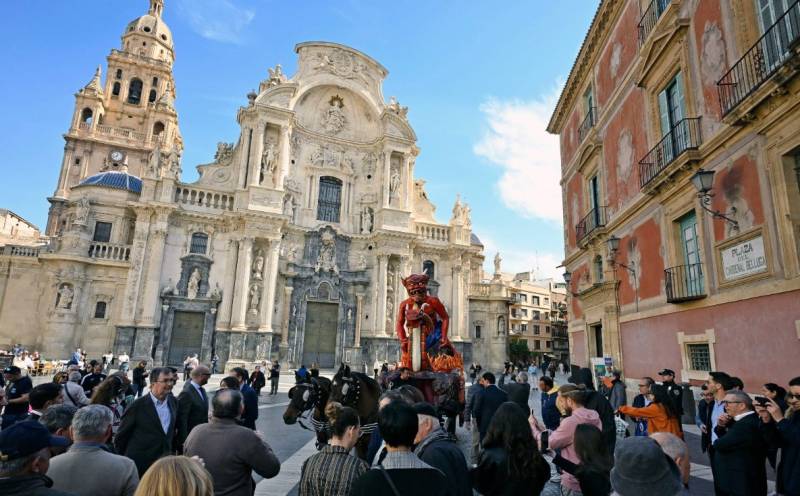
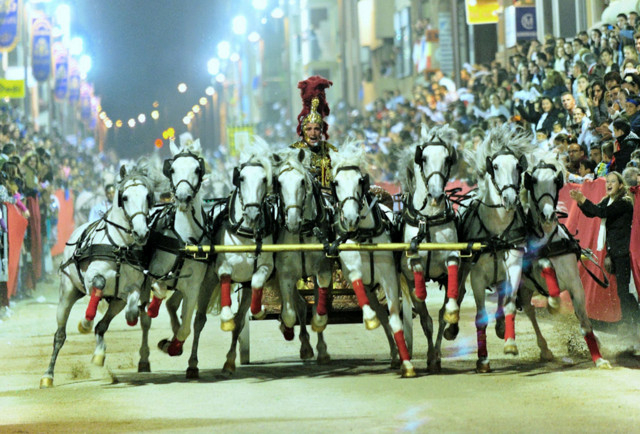
However, in spite of its many attractions, the name of Lorca is synonymous with Easter, (Semana Santa) its biblical parades of International Tourist Interest status and famous throughout Spain. The week includes a series of processions in which the Whites (Paso Blanco) and Blues (Paso Azúl) try to outdo each other with the magnificence of their embroideries and the skill and daring of their horsemen.
Lorca also has a Parador hotel, located within the historic castle.
Every day of the year apart from 1st and 6th January and 25th December, 10.00 to 14.00 and 16.30 to 18.30 (except Sunday afternoons).
These opening times are often extended and other information points created during the Semana Santa celebrations.
For more local news, events and visiting information go to the home page of Lorca Today