















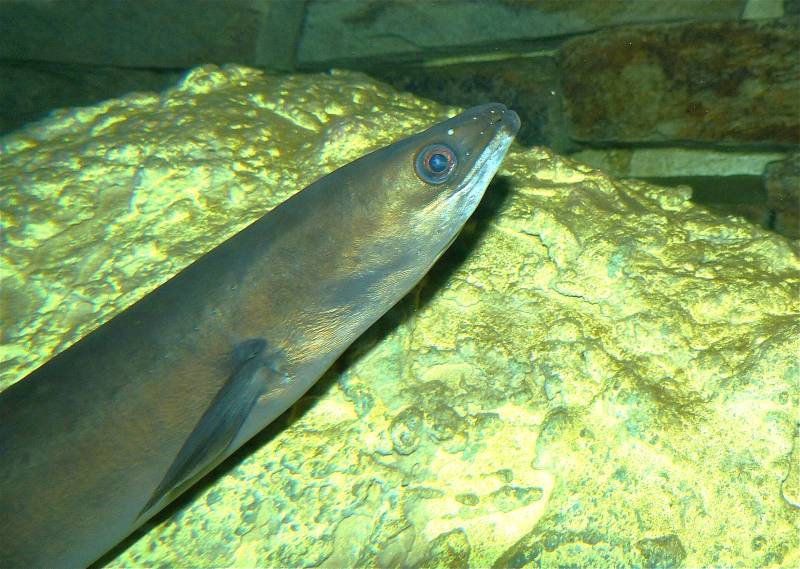
The Spanish government is planning to declare the European eel an endangered species. This way, they can protect the eel population that has been in serious decline for decades, especially in coastal lagoons like the Mar Menor.
The Ministry for Ecological Transition (Miteco) has proposed adding the eel to the official List of Wild Species under Special Protection. Vice President and Minister Sara Aagesen met with Euro-Toques España to discuss the plan. This is a group of chefs who launched a campaign called ‘Angulas, no, gracias’ (‘Eels, no thank you’) to raise awareness and discourage eating this endangered species. The ministry will formally present the proposal to the regional governments on February 17.
Although the European eel is already listed as critically endangered by the International Union for Conservation of Nature (IUCN), Spain’s new proposal gives it real legal protection. That means stricter fishing rules, habitat safeguards, and support for conservation projects to help the population recover. Once common in rivers and canals across Europe, eel numbers have dropped sharply, including in south-east Spain, with dams, degraded wetlands, overfishing, invasive species, and climate change all making it harder for them to complete their life cycle.
Fishing in the Mar Menor, a key eel habitat, is strictly controlled. Only 25 tonnes can be caught each year, during two short seasons: December 1 to January 15, and March 1 to 31. Recreational fishing is banned, and professional fishing in the Mediterranean now faces longer closures.
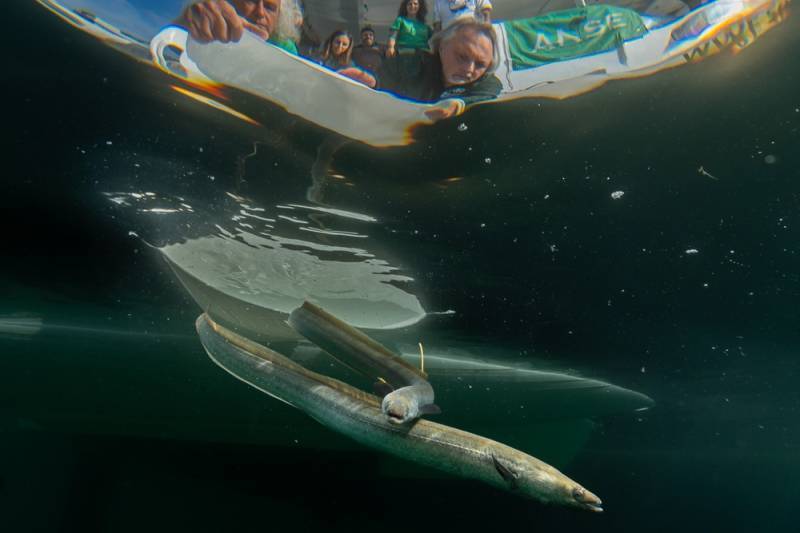
Work is already underway to help the eels recover. In January, environmental groups ANSE and WWF released 70 tagged eels back into the lagoon as part of a long-term project, helping scientists track their survival and movements. The initiative continues work ANSE started in 2017 and is now part of the GePescArt-2 project, co-funded by the EU and Spain’s Biodiversity Foundation.
Coastal lagoons like the Mar Menor are important for European eels because they give them a safe place to feed and grow. The eels also help keep wetlands healthy by eating insects and small fish and feeding birds and bigger fish. If they disappear, the whole ecosystem could be disrupted.
Image 1: Bernard DUPONT
Image 2: ANSE
staff.inc.ali