

















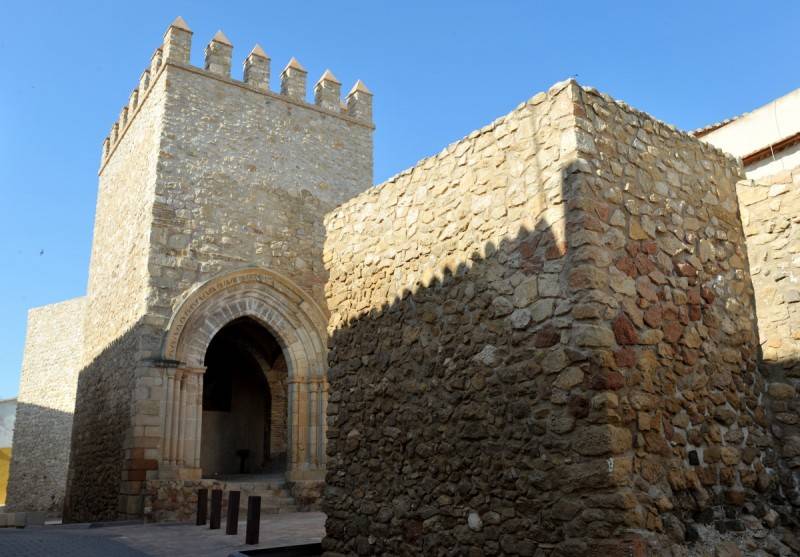
 The Town Hall of Lorca has announced an 18,000-euros emergency action to protect the Porche de San Antonio, the only remaining medieval entrance gate of its kind left in the whole of the Region of Murcia and is just one of the gates which used to provide entrance through the city wall of Lorca, and parts of the wall between Calle Gigante and Calle Zapatería.
which were badly affected by the torrential rain of late February and early March 2025.
A technical inspection has revealed various weaknesses in the stonework and problems of dampness caused by the unusually wet meteorological conditions in the Region of Murcia, and the first step is to tackle the damp before stabilizing the whole structure in an effort to safeguard it for future generations.
The work is budgeted to take two months and is identified as top priority by Mayor Fulgencio Gil, who maintains that “it is impossible to understand Lorca without its history”.
The Porche de San Antonio
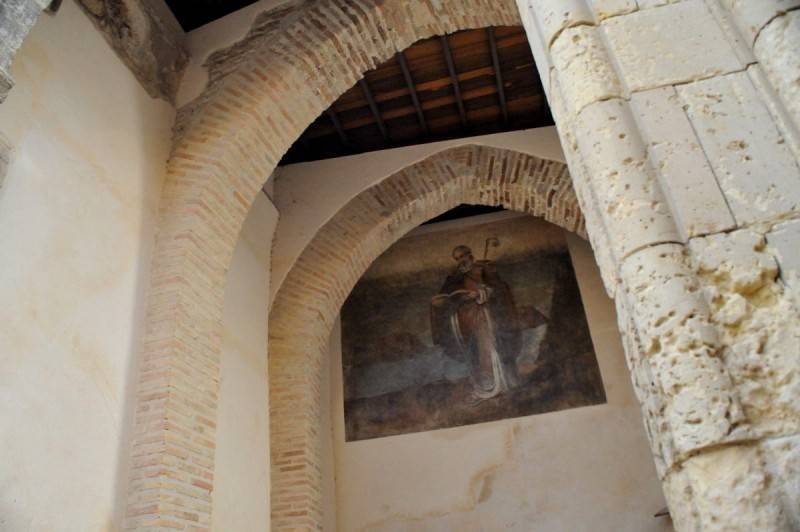 The tower of this gate was originally built by the Moors during their five century long occupation of Lorca, but in the 13th and early 14th centuries it was replaced by the conquering Christian troops with a more significant structure, as the fortifications were strengthened to protect the castle from the frequent incursions following the Reconquista of this area and the creation of a frontier between the new Christian kingdoms and the last remaining stronghold of the Moors in Granada. (See History of Lorca part 2 for further information about this period.)
The door itself was made out of wood, reinforced with iron bars, but this no longer remains and visitors can instead see only the restored tower, climbing up its winding staircase from Calle Gigante to Calle Zapatería. The tower measures 8.2 metres in height from the lower level, and 5.3 metres on the upper side, although it is known that the original Moorish structure was rather smaller. It is surprising to find that decoration was added – after all, this was meant to be a functional defensive structure – but there are crenelations at the top and a great deal of effort was put into making the archways as impressive as possible.
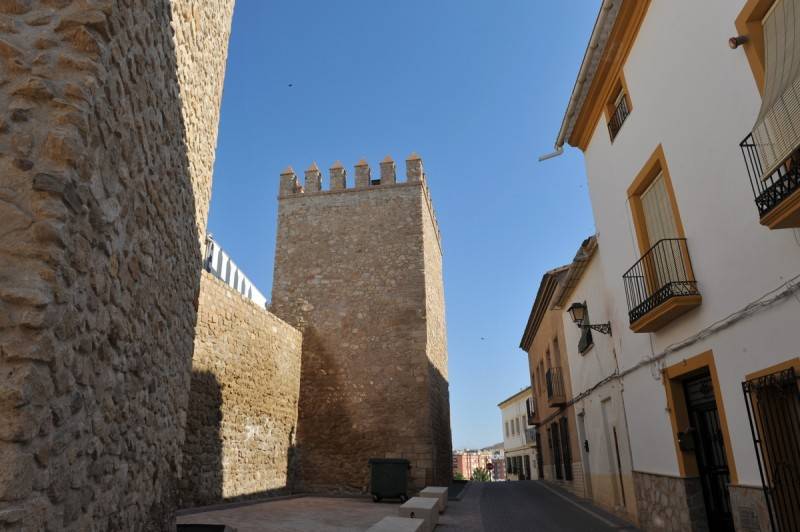 Inside the tower is a mural showing San Ginés de la Jara, to whom the tower was originally dedicated by the Christians, depicted in a mountain setting where a small chapel sits on top of a hill behind him. More decoration used to exist on the upper level of the tower, which is accessed by a wooden staircase, and consisted of a gargoyle with a dragon’s head.
For more visiting information, local events and news contact the tourist office at the Palacio de Guevara (telephone 968 441914) or go to the home page of Lorca Today.
staff.inc.ali
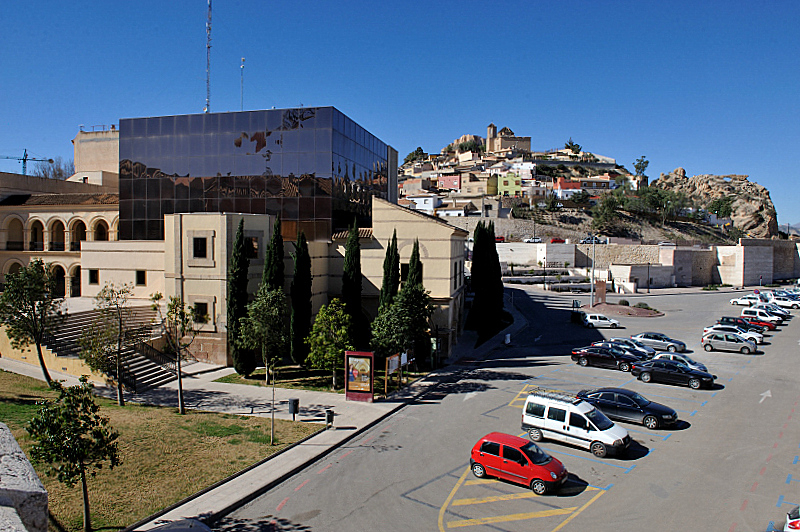
The rich and extensive history of Lorca has left a legacy of archaeological sites and historic buildings around which the modern city has built its tourism industry. Amongst these are Lorca Castle, Plaza de España, the former Collegiate church of San Patricio, the municipal archaeological museum, the Casa Huerto Ruano, the Palacio de Guevara and the churches and convents of San Francisco, San Mateo, the Virgen de las Huertas, La Merced, El Carmen and many others.
Unfortunately, Lorca has been prone to natural disaster, suffering a severe flood in 1973 which killed 50 people, and a Gota Fría on September 28th 2012, as well as a series of earthquakes, the most recent of which was 5.3 on the Richter scale on 11th May 2011 and claimed 9 lives.
 Lorca also has an area of unspoilt coastline incorporating the Parque Regional de Cabo Cope - Puntas de Calnegre, which includes the beaches of Puntas de Calnegre, Cala Calnegre and various others. Although only one is accessible by road others can be reached along dirt tracks!
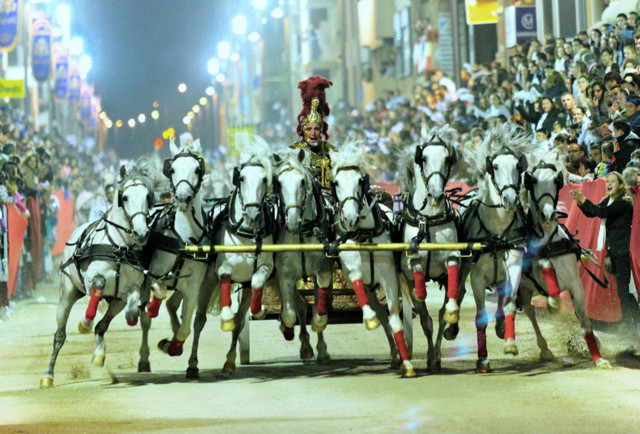
In terms of fiestas, Lorca is synonymous with Easter (Semana Santa), its biblical parades of International Tourist Interest status being famous throughout Spain. The week includes a series of parades in which the whites (Paso Blanco) and blues (Paso Azul) try to outdo each other with the magnificence of their embroideries and the skill and daring of their horsemen.
In the Autumn Lorca also celebrates the Fiestas of San Clemente and a Feria and there are a series of important events throughout the year in the Recinto Ferial, as well as a busy cultural and sporting programme.
The tourist office relocated for 14 years to Calle San Patricio, near the church, but has now returned to its former premises alongside the Palacio de Guevara in the Plaza Concha Sandoval, or Plaza de la Bordadora (click for map).
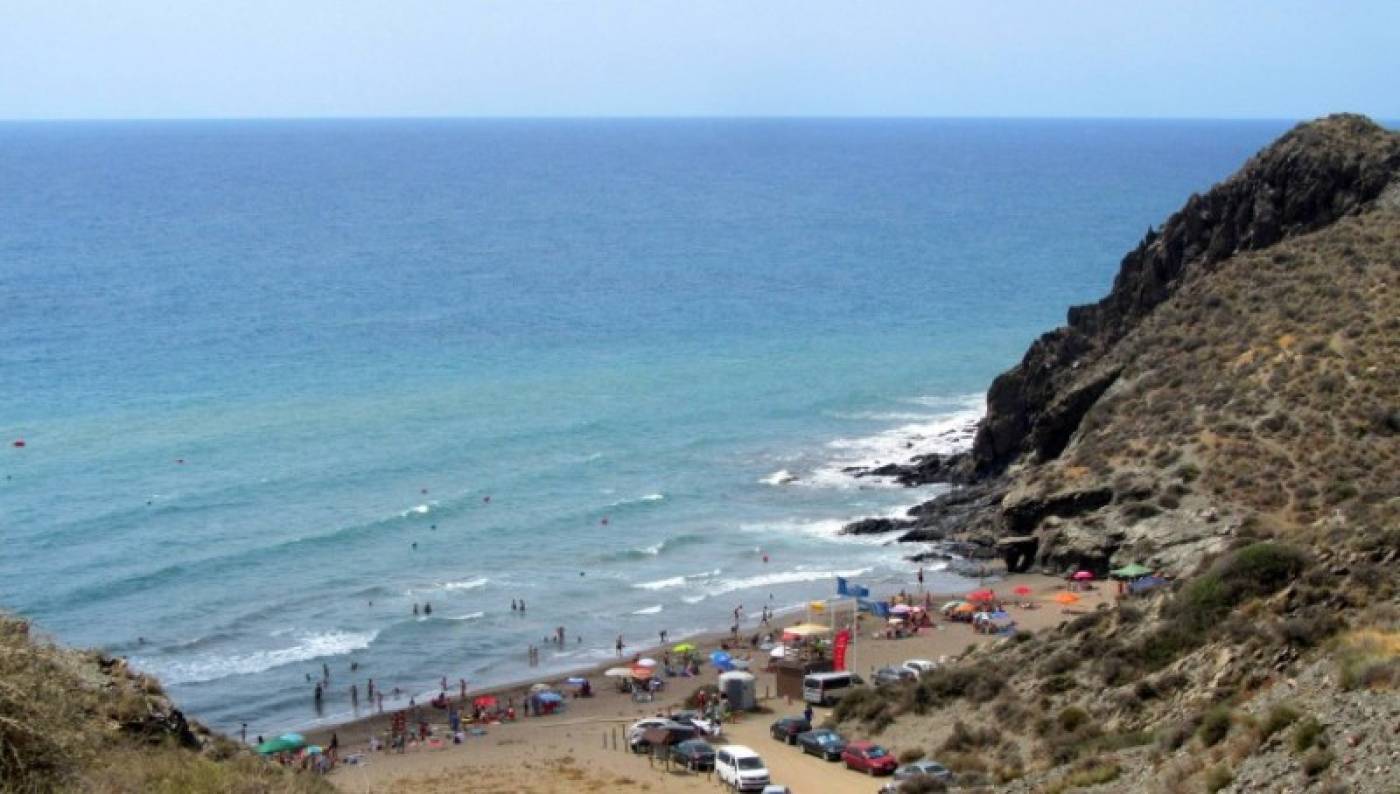 Lorca also has an area of inspoilt coastline incorporating the Parque Regional de Cabo Cope - Puntas de Calnegre, in the Sierra de Almenara, which includes the beaches of Puntas de Calnegre, Baño de las Mujeres, San Pedro, El Siscal, Cala Honda, Cuartel del Ciscar, Junquera, Cala de la Gruta, Cala Leña, Los Hierros, Cala Blanca and Playa Larga, although many are accessible only along difficult tracks or by boat!
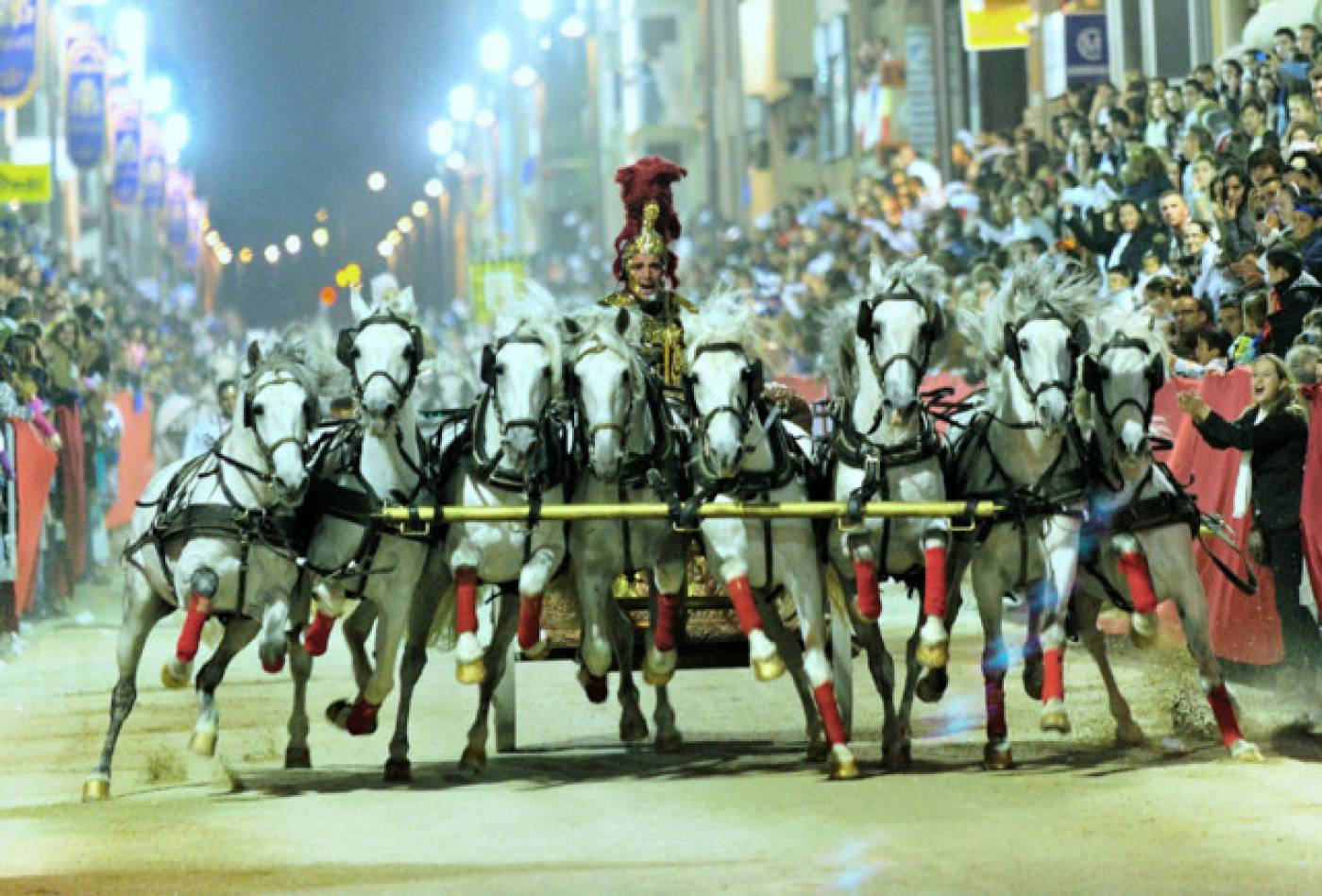 However, in spite of its many attractions, the name of Lorca is synonymous with Easter, (Semana Santa) its biblical parades of International Tourist Interest status and famous throughout Spain. The week includes a series of processions in which the Whites (Paso Blanco) and Blues (Paso Azúl) try to outdo each other with the magnificence of their embroideries and the skill and daring of their horsemen.
Lorca also has a Parador hotel, located within the historic castle.
Every day of the year apart from 1st and 6th January and 25th December, 10.00 to 14.00 and 16.30 to 18.30 (except Sunday afternoons).
These opening times are often extended and other information points created during the Semana Santa celebrations.
For more local news, events and visiting information go to the home page of Lorca Today