







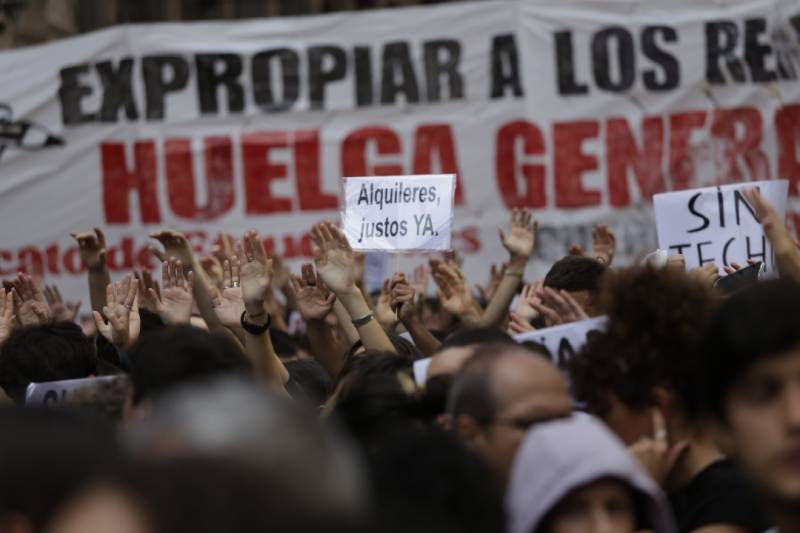











Spain's housing crisis has gone from a long-running source of frustration to a national political storm in little more than a week. What began with the eviction of an 87-year-old woman from the Madrid home where she had lived for around 70 years has grown into mass protests, camps in city squares, the rejection of emergency housing measures in Congress and now a snap general election.
On Monday October 5, President Pedro Sánchez announced that Spain will go to the polls on November 29, just days after his government's housing measures were rejected by Congress.
The announcement came as housing protests continued across the country, with thousands taking to the streets over the weekend and calls growing for a general strike.
The current wave of protests was sparked by the eviction of Maricarmen Abascal from her Madrid home on September 23. The 87-year-old, who had lived in the property for seven decades, was removed from her home despite her age and poor health. Images of her being taken from the property on a stretcher caused public anger and quickly turned her case into a symbol of Spain's housing problems.
Although an agreement was eventually reached allowing Maricarmen to return home at the same rent, the damage had already been done. Protests were organised in Madrid, and on September 26 a group of demonstrators stayed behind after a march and began putting up tents in Puerta del Sol.
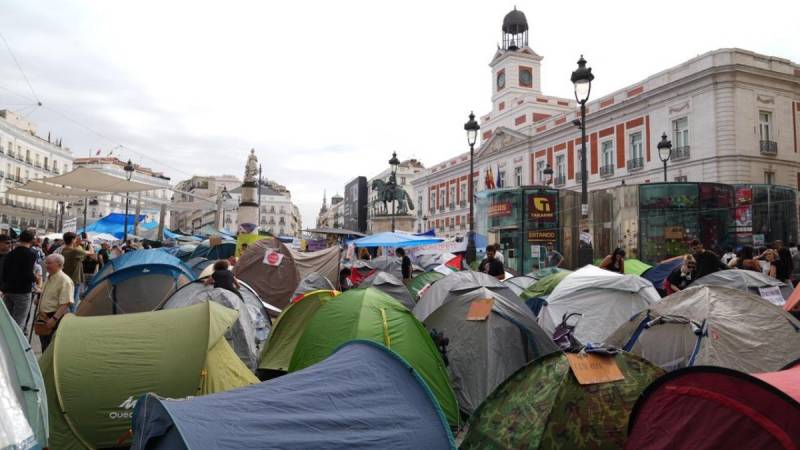 What started with a small number of tents has since grown into a large camp with more than 2,000 tents. The protest has no fixed end date, and similar actions have appeared in other Spanish cities. But Maricarmen's eviction had become part of a much bigger argument about housing in Spain. They weren't just protesting about one eviction, but demanding changes to rents, tenant protections and the availability of affordable homes.
Under growing pressure, Sánchez's government moved quickly. On September 29, the Cabinet approved two emergency housing decrees. Among the measures were extending protection against evictions of vulnerable people until 2030 and extending some rental contracts for two years.
The proposals also included measures concerning seasonal and room rentals and restrictions affecting investment funds. But splitting the package into two separate decrees proved controversial, while the Government still needed support from a fragmented Congress to get them through.
Housing campaigners argued that the measures did not go far enough, while political parties on different sides of the Government disagreed over parts of the package.
Then, on Friday October 2, both decrees were rejected. The vote was a major setback for Sánchez. The PSOE and Sumar did not have enough support to pass the measures alone, and Junts joined the Partido Popular and Vox in voting against them. For the housing movement, the failed vote became another reason to take to the streets.
Murcia llena las calles: ❌contra alquileres imposibles, especulación y rentismo. 🏠 Vivir dignamente es un derecho. Y se defiende. ✊ https://t.co/eXJsxINjz5
— Angel l. Hernández (@Angel_L_Hern) October 4, 2026
By Sunday, the demonstrations had grown dramatically. In Murcia, between 25,000 and 30,000 people took part according to organisers, while the Delegation of the Government put the figure at around 4,500. The march moved through the city in heavy rain before ending at the Palacio de San Esteban, with protesters demanding lower rents, longer-term rental contracts, more public housing and action against evictions.
One of the main messages was that the housing crisis is particularly serious in the Region of Murcia because wages are among the lowest in Spain. PAH spokesperson Francisco Morote also called on regional president Fernando López Miras to apply Spain's Housing Law in Murcia, Cartagena, Lorca, Molina de Segura and Alcantarilla in an attempt to bring rents down.
More than 50 people had already spent a night camping in Murcia's Glorieta de España earlier in the week as part of the protests.
Alicante has also seen its own housing mobilisation. Thousands took part in a demonstration on Saturday October 3 before an indefinite camp was established in Plaza de la Montañeta. Organisers say they intend to keep the camp going for now, with people being encouraged to bring tents and supplies.
The protests have moved beyond demonstrations and camping. The Sindicato de Inquilinas says it is in talks with Spain's major trade unions about a general strike over housing and expects to announce the date in the coming days. It has said the strike will take place during November.
The organisation's spokesperson Alicia del Río also said the housing crisis will be a central issue during the election campaign. That campaign will now be much sooner than expected.
Sánchez announced on October 5 that Spain will hold a general election on November 29, after spending the weekend considering his options following the defeat of the housing decrees.
The timing means housing is likely to be one of the defining issues of the campaign, particularly after two weeks in which an individual eviction has developed into a nationwide protest movement.
And with demonstrations continuing in Murcia, Alicante and lots of other cities like Oviedo, Logroño, and many more, the calls for action are unlikely to disappear because an election has been called.
Image 1: UGT
Image 2: CCOO
staff.inc.ali
Sign up for the Spanish News Today Editors Roundup Weekly Bulletin and get an email with all the week’s news straight to your inbox
Special offer: Subscribe now for 25% off (36.95 euros for 48 Bulletins)
Read some of our recent bulletins:
Discount Special Offer subscription:
36.95€ for 48 Editor’s Weekly News Roundup bulletins!
Please CLICK THE BUTTON to subscribe.
(List price 3 months 12 Bulletins)