




















Keepers at Bioparc Valencia have given the calf of a critically endangered Mhorr gazelle a second chance after its mother sadly died within hours of giving birth.
The calf was born within the International Captive Breeding Program (EEP) for this particular species which was previously considered extinct in the wild and continues to be classed as 'critically endangered' on the Red List of the International Union for the Conservation of the Nature ( IUCN).
But a few hours after a "laborious delivery", its mother died and the protocol for hand-rearing the newborn was activated, with the "added responsibility of knowing that each new Mhorr gazelle represents hope for the survival of its species", according to the park and zoo.
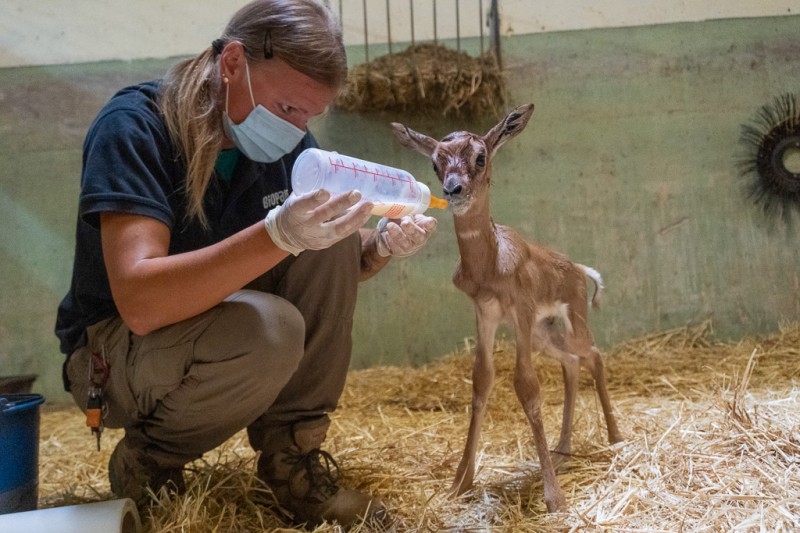
Caregivers feed the newborn with bottles of "nutritious and energy-packed" milk five times a day, using "pampering" methods which simulate the natural behaviour of the mother.
"A gauze pad moistened with warm water is wiped over the genital area to encourage urination and expulsion of faeces, and observation of the way in which the calf urinates indicates that he is a male," says Bioparc Valencia.
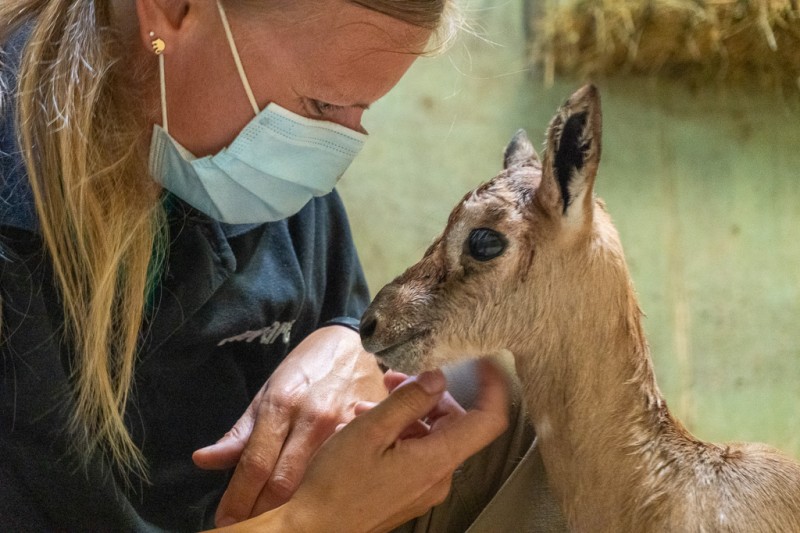
The animals motor activity is also induced, since it is essential that he moves so that his joints become stronger, and if the young gazelle continues with this "positive evolution", in a few weeks he will be able to join his surrogate family made up of two males, two females and another calf.
IMAGE: Bioparc Valencia