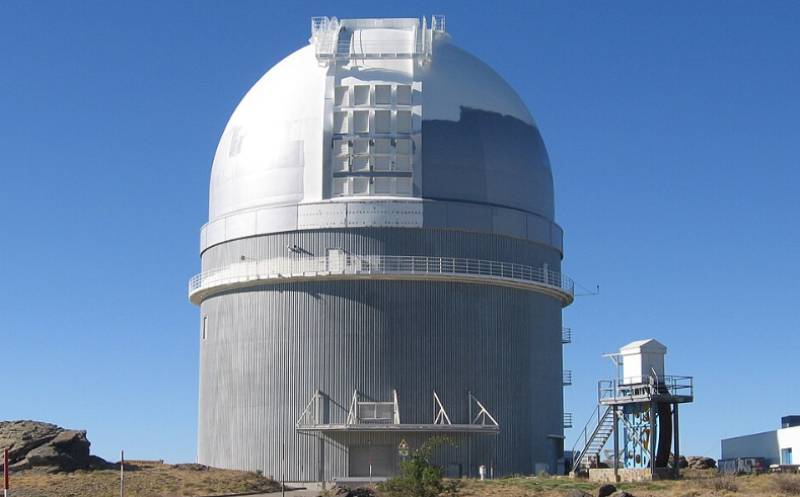
An Almería observatory captured two fireballs and a rare red electrical phenomenon in the space of 24 hours
The Calar Alto Observatory recorded a series of spectacular astronomical events during the early hours of September 10 and 11
The skies above Spain put on a remarkable show last week, and fortunately one of Europe's most important observatories was watching. The Calar Alto Observatory, in the Sierra de Filabres mountains in Almería province, captured three extraordinary phenomena during the early hours of Thursday September 10 and Friday September 11.
The first event occurred at 2.29am on September 10, when a rock that had broken away from a comet entered the Earth's atmosphere at an estimated speed of 128,000 kilometres per hour. The fireball began glowing at approximately 98 kilometres above the province of Ciudad Real, tracked northwest, and finally extinguished at an altitude of 38 kilometres. It was picked up by detectors at multiple observatories across Andalucía, from Huelva to Seville to Granada.
Later that same night, the observatory recorded something considerably rarer: a red sprite. These are fleeting electrical phenomena triggered by powerful storms, lasting anywhere between 3 and 10 milliseconds, which makes them exceptionally difficult to observe and study. A large storm front had developed close to the Calar Alto site, producing the conditions needed for the sprite to form. Catching one on camera is, by any measure, a stroke of good fortune.
Then, in the early hours of September 11 at 3.46am, the sky lit up with what scientists are describing as a superbolide. This second cometary rock entered the atmosphere at a considerably higher speed, approximately 238,000 kilometres per hour, northwest of the Balearic Islands. Its luminous trail began at 165 kilometres above the Mediterranean Sea, moved eastward, and ended at an altitude of 74 kilometres. It was an exceptional event by any standard.
All three phenomena were analysed by Professor José María Madiedo of the Institute of Astrophysics of Andalucía, part of the CSIC research network.
The Calar Alto Observatory has been operating since 1973 following an agreement between the Spanish and German governments. It houses the largest telescope on the European continent, with a 3.5 metre aperture, and carries out research into everything from exoplanets to galactic structure. Nights like these are a reminder of what it is there for.