


















Early every year, those of us in southern Spain who are fortunate enough to live in an area with pine trees find ourselves on the lookout for the trails of processionary caterpillars as they drop from the nests in the branches above, providing a fascinating sight but also a serious danger to children and pets – and they can be no fun for adults, to boot!
And every year, if the trees are on the street, we wonder why the local Town Hall has not implemented measures to eliminate, or reduce, the number of these prickly creatures to be seen.
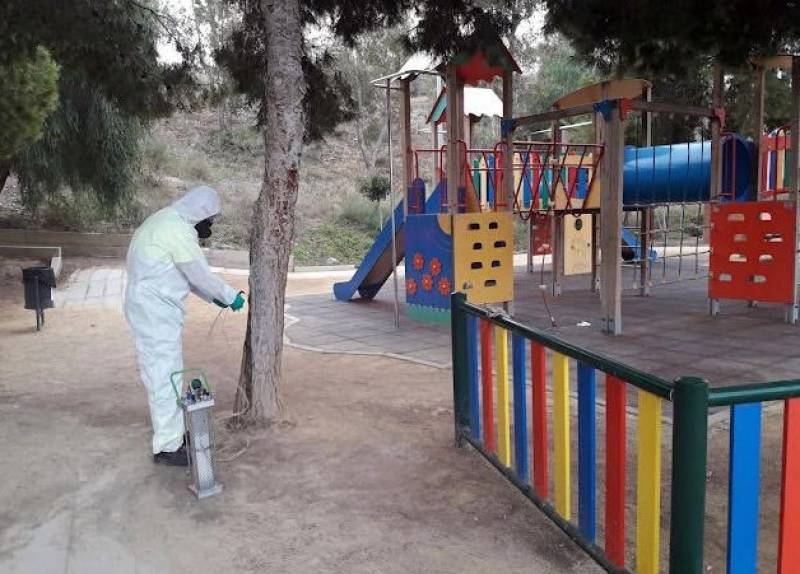
But in Águilas, the local council believes, quite rightly, that the best cure for this particular problem is prevention, and as early as 22nd November a campaign is beginning to get rid of the caterpillars from school playgrounds, children’s play areas and other locations where they are most likely to represent a threat to youngsters. Substances are being injected into the trunks of trees while spraying of the branches complements the deterrent, significantly reducing the scale of the problem if never quite eliminating it altogether.
The pine processionary (Thaumetopoea pityocampa) is so called because members of the species in the caterpillar phase of their life cycle, before they metamorphose into moths, form nose-to-tail processions as they leave their soft cocoon nest of spun filaments, The species is widespread throughout the warmer Mediterranean areas of Spain and other parts of Europe.
The favoured nesting grounds of processionary caterpillars are higher up in pine trees, where the nests are closest to the winter sun, and it is normally in late winter and early spring that the caterpillars drop from the cocoon nests and form "processions" in search of soft, warm earth in which to pupate. There can be hundreds of caterpillars nose to tail, winding along roadways or rough ground, and although they may appear innocuous they can be lethal to animals and cause serious reactions in humans, especially young children.
For more local events, news and visiting information, contact the tourist office of Águilas (telephone 968 493285) or go to the home page of Águilas Today.
staff.inc.ali