Researchers from the Universities of Murcia and Oviedo, together with conservation groups Catsharks and Tanit, have documented sightings of a giant oceanic manta ray and a black stingray in waters off Cartagena and Portmán. Their findings have now been published in scientific journals.
The experts say the discoveries highlight two important facts. Murcia's coastline continues to be a rich habitat for marine life, particularly sharks and rays, but warmer seas are also encouraging tropical species from the Atlantic to venture further into the Mediterranean.
Víctor Orenes, a researcher at the University of Murcia, explained that rising sea temperatures are not only affecting native plants and animals but are also making the Region more attractive to species normally found in tropical waters.
He added that prominent headlands such as Cabo de Palos, Cabo Tiñoso and Cabo Cope act as natural gateways between the Atlantic-influenced Alboran Sea and the Mediterranean, making the Region of Murcia an important location for monitoring the effects of climate change on marine biodiversity.
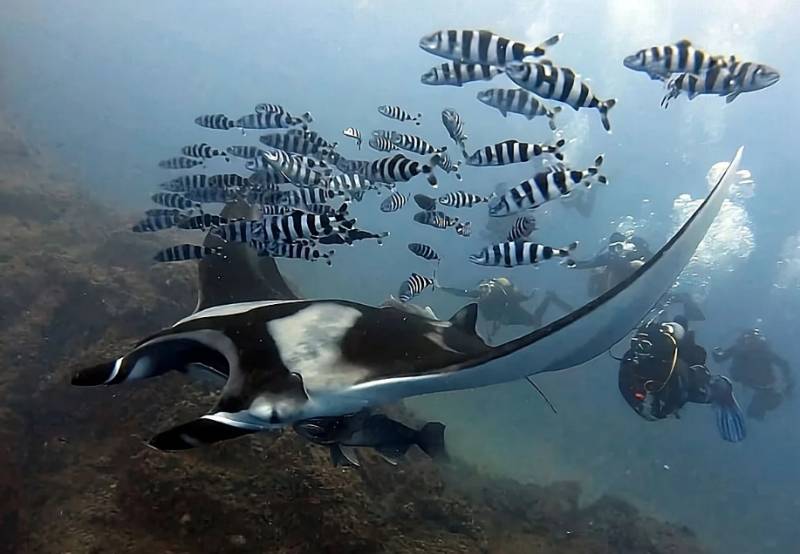
One of the most remarkable discoveries came in September 2023, when divers from the Caballito Salado diving club in La Azohía spotted a young female giant oceanic manta ray with a wingspan of around 2.5 metres. The endangered species is rarely seen in the Mediterranean, although scientists believe young manta rays occasionally enter through the Strait of Gibraltar after migrating across the Atlantic.
Researchers also highlighted the black stingray, a species usually found along the tropical and subtropical coasts of Africa. A photograph taken in Portmán Bay in 2018 confirmed its presence in Murcia, while researchers also uncovered a historical image from 1945 showing fishermen with a black stingray caught off Cabo de Palos.
According to the researchers, these sightings reinforce the international importance of Murcia's coastline as a refuge for sharks and rays. They say continued monitoring will be essential to protect these species as climate change and other environmental pressures continue to reshape marine ecosystems.