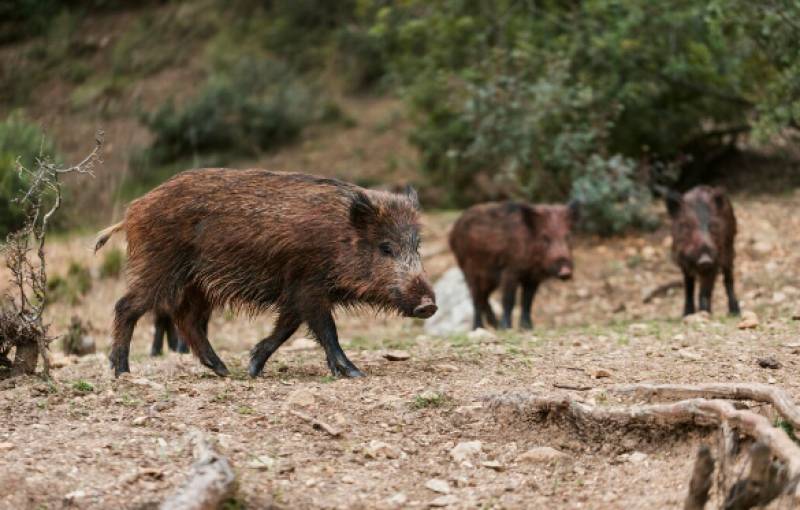
Murcia wants to cull wild boar to prevent spread of swine fever
ARCHIVED ARTICLE -
Farmers warn that the Region of Murcia must act now to prevent this deadly disease
Murcia is stepping up its warnings about African swine fever after fresh cases were confirmed in wild boar in the province of Barcelona. The Coordinator of Farmers and Livestock Breeders Organisations (COAG) is urging the regional government to take stronger action before the virus has any chance of travelling south.
The group wants more extraordinary culls in areas of the Region of Murcia where wild boar numbers remain high. Similar operations have already taken place in Calblanque, Escombreras and parts of the Sierra Espuña.
COAG claims that Spain has lost control of wild boar populations in many areas, pointing out that numbers have risen by 550% in just three decades.
Although the Region already has hunting seasons and organises authorised hunts in areas where crops and farms have been affected, the organisation argues that the current efforts are not enough since the plucky animals are now entering urban areas.
“We need more scheduled monitoring and safety measures,” José Miguel Marín, president of COAG Murcia, stressed.
Murcia was forced to declare a hunting emergency in several municipalities during the pandemic years due to the rapid growth of wild boar numbers. That measure helped reduce the population to more manageable levels. Between 2012 and last year the Region granted more than 4,000 permits to hunt wild boar in 39 municipalities after repeated damage to almond groves and fruit trees. Almost 10,000 animals were culled, just over half of them male. The overall number of captures has steadily dropped over the past decade.
Mr Marín also highlighted the major investment made by livestock farmers to avoid any contact between wild boar and domestic pigs. According to COAG estimates, farms have spent between €135,000 and €240,000 on prevention measures, with a further €75 a year in maintenance. Many farms now have double walled fencing buried into the ground, sanitary fords and disinfection arches at access points, and mandatory changing rooms and showers for workers.
“We don’t have the same lack of control as in Catalonia,” noted the regional head of COAG, but “the arrival of swine fever in Spain forces us to make progress in controlling wildlife.”